
Start with the business path, not the stack
Most ecommerce launches fail to move quickly because the first conversation becomes a tool comparison. A better first step is to map the selling motion: catalog size, payment methods, fulfillment model, promotions, content publishing, and who will operate the store after launch.
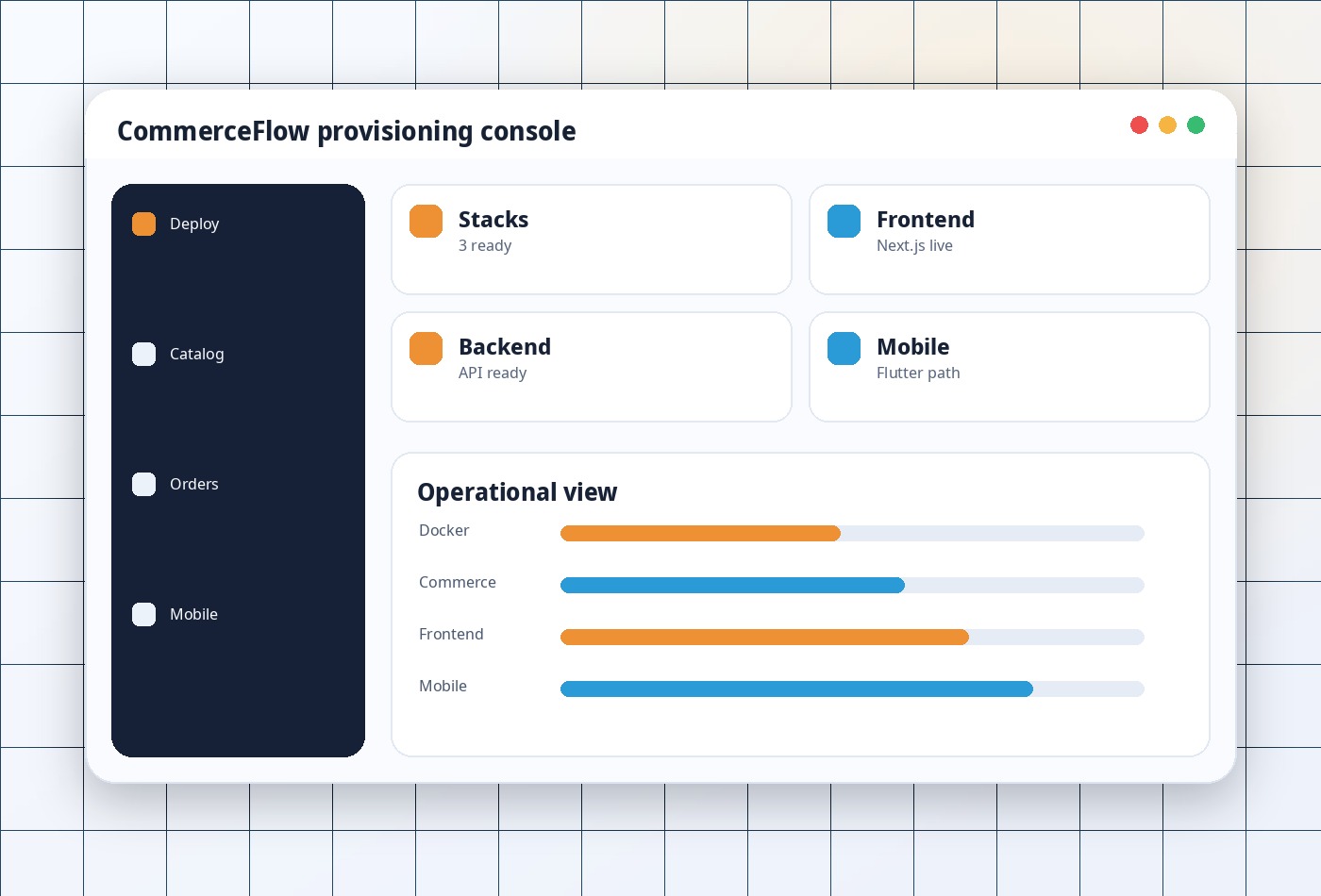
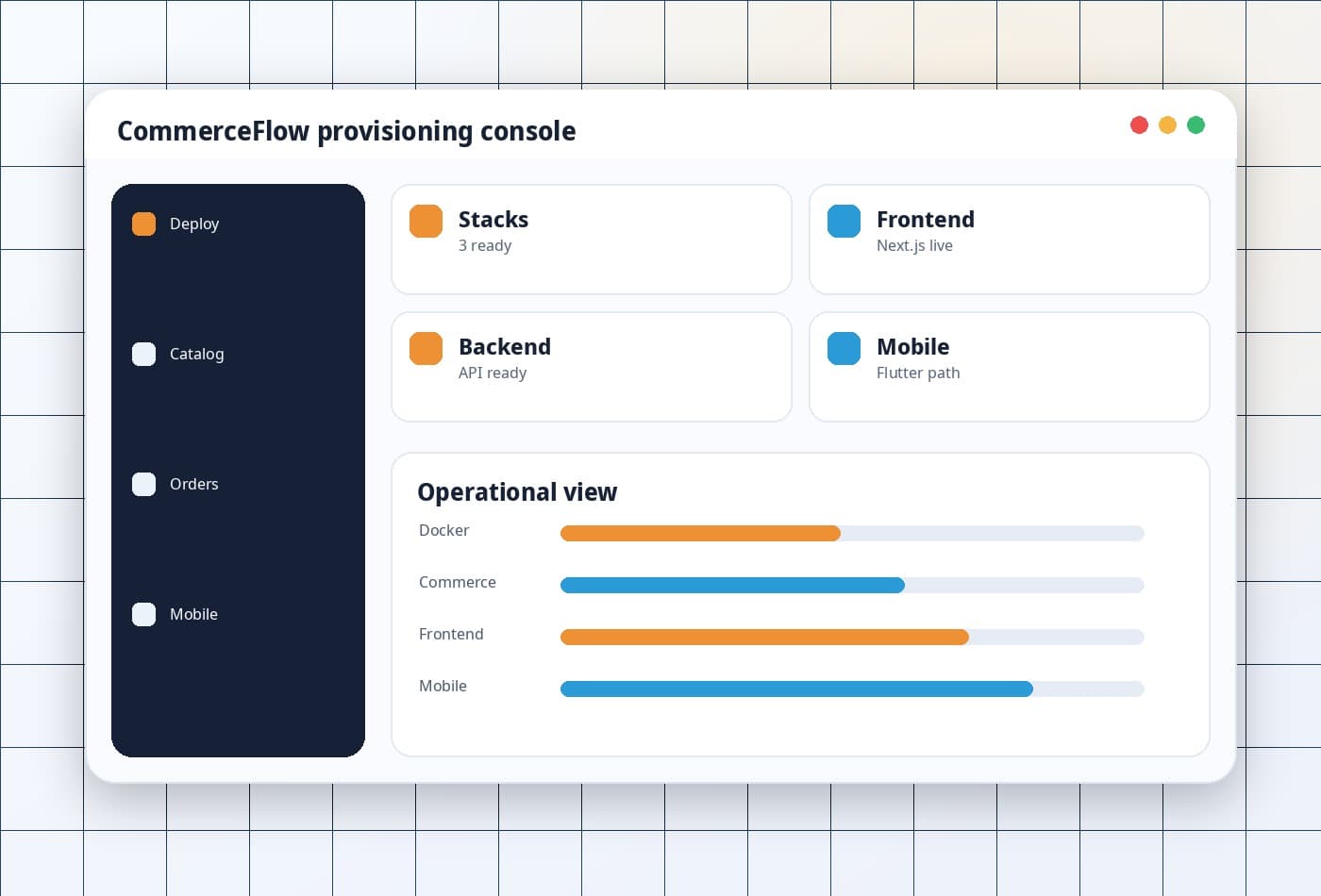
For a focused launch, a headless WordPress and WooCommerce backend with a Next.js storefront can work well. For businesses that need custom catalog rules, mobile app paths, internal workflows, or deeper analytics, a FastAPI and Postgres backend gives the team more control.
A simple launch readiness equation
You can estimate launch readiness with a practical weighted model:
Where C is catalog readiness, P is payment readiness, F is fulfillment readiness, A is analytics readiness, and O is operator readiness. If the score is below 70, launch the smallest reliable storefront first and avoid adding complex automation too early.
What the first release should include
- Fast product discovery with categories, search, and clean product pages
- CMS-controlled banners, policy pages, product stories, and SEO metadata
- Payment integration with clear order confirmation
- Mobile-friendly checkout and performance budgets
- Analytics events for product view, add to cart, checkout start, and purchase
- Deployment, SSL, backups, and rollback plan
When to move beyond a template
A template storefront is useful when speed matters more than custom workflow. A custom build becomes valuable when the business needs special pricing rules, inventory automation, ERP integration, mobile apps, marketplace publishing, or role-based admin operations.
Illume usually recommends a staged path: launch the smallest dependable commerce experience first, measure behavior, then invest in the backend and automation layer that the data actually justifies.